
Building inclusive disaster preparedness through community-based early warning and response systems: lessons learned from Bangladesh and Fiji
The Sendai Framework highlights that disaster risk reduction (DRR) requires an all-of-society engagement and partnership, paying attention to those disproportionately affected by disasters, which includes people with disabilities, who are up to four times more likely to die in a disaster event.
Many DRR actors and policymakers are yet to prioritise actively engaging people with disabilities within the wider scope of reducing disaster risks, and have been slow to adopt inclusive practices. Despite the Sendai Framework recognising that people with disabilities are crucial contributing stakeholders, they are still being left out of DRR decision-making processes. As a result, there remains few examples of good practice to guide DRR stakeholders on how to meaningfully engage people with disabilities.
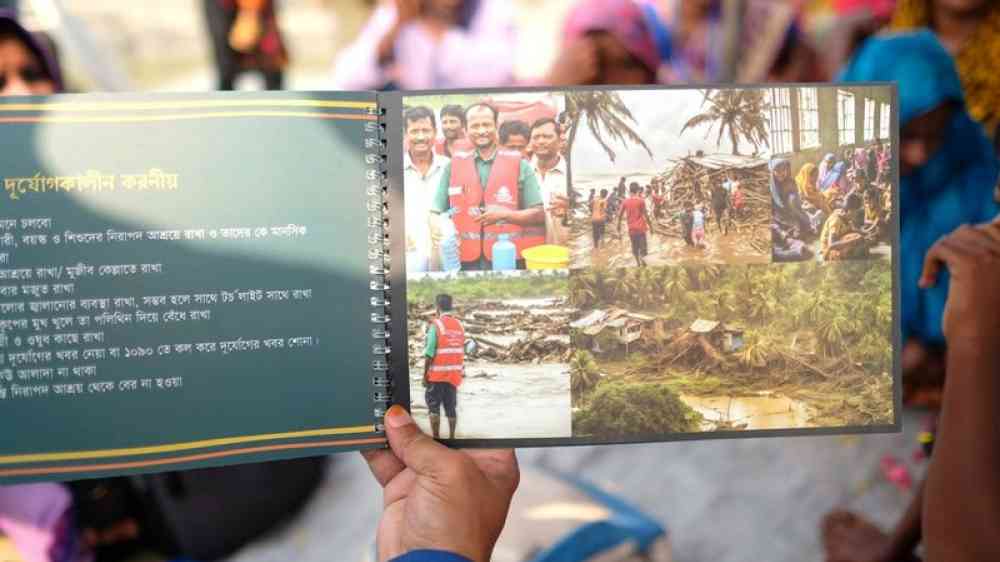
This side event will showcase community-led initiatives from Bangladesh and Fiji where people with disabilities are central to developing and implementing early warning and response systems, including early action plans, and how it can be adapted to other disaster-risk contexts.
Overall, the side event will equip participants with the strategies needed to build more inclusive DRR governance systems and early action plans, and will demonstrate how meaningful partnerships with people with disabilities contributes to achieving the Sendai Framework’s goals for inclusive DRR.
Session objectives
- This side event will share practical, community-level examples of initiatives to demonstrate inclusive disaster risk management, and highlight the key strategies and approaches used to meaningfully engage people with disabilities in DRR efforts at the community level.
- The Bangladesh case study will demonstrate undertaking disaster risk assessments that identify the disproportionate risks faced by people with disabilities, developing early action plans, and the engagement of people with disabilities in local disaster management committees.
- The Fiji case study will share the strategies used for effective advocacy and engagement with the National Disaster Management Office, to ensure early warnings are accessible to people with disabilities, and the inclusive community-based early action strategies that are used to disseminate and act upon warnings.
Moderator:
- Dulamsuren Jigjid (Duya), Executive Director at the Culture Centre for the Deaf, Mongolia
Speakers:
- Jay Nasilasila, Fiji Disabled People's Federation
- Nasrin Jahan, Disabled Child Foundation Bangladesh
- Abdullah Al Mamun, CBM Global Bangladesh
- Daud Jibon Das – Caritas Bangladesh
Learn more
- ‘Our Lessons: An approach to disability-inclusive disaster risk reduction based on consultations with people with disabilities in the Asia and Pacific regions’ (CBM Global Disability Inclusion, 2022)
- ‘Disability-Inclusive Disaster Risk Reduction Call to Action: We are the experts in our own lives’ (CBM Global Disability Inclusion, 2024)
Organized by
- CBM Global Disability Inclusion
- Fiji Disabled People's Federation
- Disabled Child Foundation Bangladesh
- CBM Global Bangladesh
- Caritas Bangladesh
Agenda
04 Jun 2025
12:15 - 13:45 (CEST+0 Europe/Berlin)
Location
Room 4
CICG
CICG
Online access
Interpretation
ILSDetails
Accessible
International sign
Cart
Contact
Claudia Bailey
[email protected]
Onsite Accessibility