
Localisation of Sendai Framework for Disaster Risk Reduction: Pathways to build resilience to disasters and Shocks
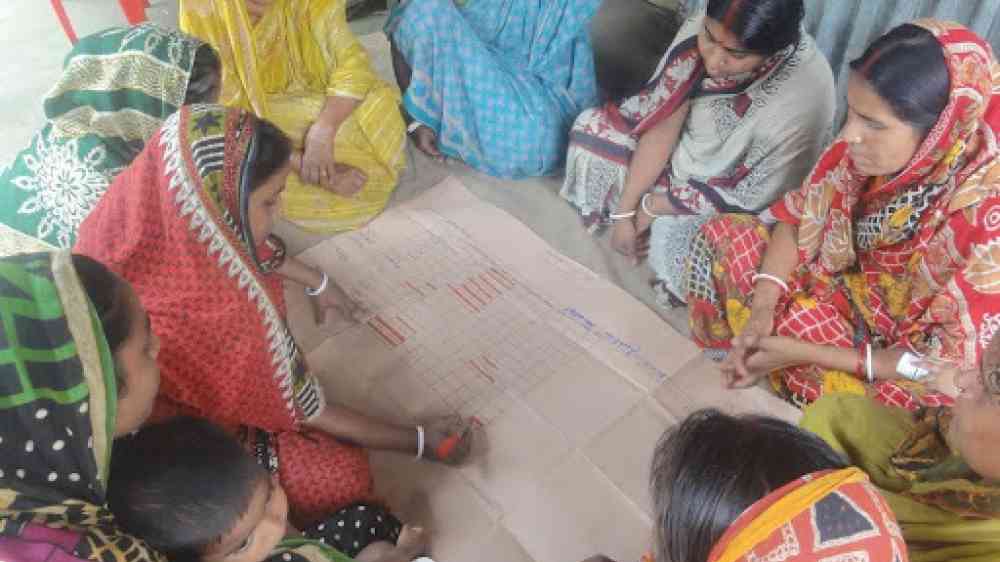
Disaster risk is increasingly becoming complex. A hazard turning into disaster can trigger compounding impacts casing other crises and shocks within and across societies and geographies. Disasters do not happen in isolation. Reducing risk of disaster, therefore, requires broader understanding of humanitarian-climate-peace-development nexus at the local level and all intersectionality of the parameters of the quadruple nexus. The response to risks and crises, therefore, must happen at local level where the impacted communities must be at the forefront of solutions.
The session will be investigating the Sendai MTR outcome in light of localisation of DRR and risk-informed development as well as provide insights into various approaches member-states and stakeholders can take towards developing a risk-informed decision-making process. The session will further showcase examples of localisation with the aim to define localised risk-informed, and sustainable pathways that empowers the communities taking an inclusive whole of society approach.
Session objectives
- Showcasing practical and innovative examples of how risk-informed development can be put into practice.
- Advancing better understanding and application of risk-informed development approach among a diverse set of sectors and stakeholders.
- Promoting systemic thinking to strengthen resilience and propose a normative framework supporting a long-term and continuous process for locally led risk-informed resilience development.
Outcomes
- Shift in the locus of responsibility and accountability for preventing risk creation and reducing existing risk, away from a single centralized agency, to coordinate, risk-informed decision-making and investments that involve all stakeholders.
- To build capacity and technical capacity across all phases of the risk management process, from the generation of risk data to its use in risk-informed decision-making.
- Encourage member States to create specific sectoral DRR budget allocations through government institutions at all appropriate scales and create legal structures supporting risk-informed investment.
Live stream:
Speakers:
- Ms. Anna Hjärne, Programme Manager, Swedish International Development Cooperation Agency (Sida)
- Ms. Liza Velle Ramos, Head of Planning and Research, Makati City, Philippines
- Ms. Catalina Jaime, Head of Climate and Conflict at Red Cross Red Crescent Climate Centre, Management Team at Anticipation Hub and MapAction Trustee
- Mr. Antoine Le Solleuz, Deputy Mayor of Nancy; Member of UCLG's Policy Council on "Resilient and Regenerative Territories: Renaturing
- Ms. Michelle Higelin, Executive Director, ActionAid Australia
Agenda
03 Jun 2025
12:30 - 14:00 (CEST+0 Europe/Berlin)
Location
Plenary B
CICG
CICG
Online access
Remote participation available to those registered for the conference
Details
Accessible
International sign
Cart
Onsite Accessibility