
Global EW4All Multi-Stakeholder Forum
Co-led by the UN Office for Disaster Risk reduction (UNDRR) and the World Meteorological Organization (WMO) and supported by many partners, the first Global Early Warnings for All Multi-Stakeholder Forum aims to accelerate implementation of the Early Warnings for All initiative and other efforts to strengthen early warning systems worldwide as a contribution to the Sendai Framework Target G.
The Forum provided multiple opportunities for peer-to-peer and cross-regional learning, sharing of good practices and experiences, renewing existing and building new partnerships and identifying ways to close remaining gaps. The first global EW4All Multi-Stakeholder Forum captured regional experiences and took stock from outcomes of regional fora that were organized throughout 2024.
About the initiative
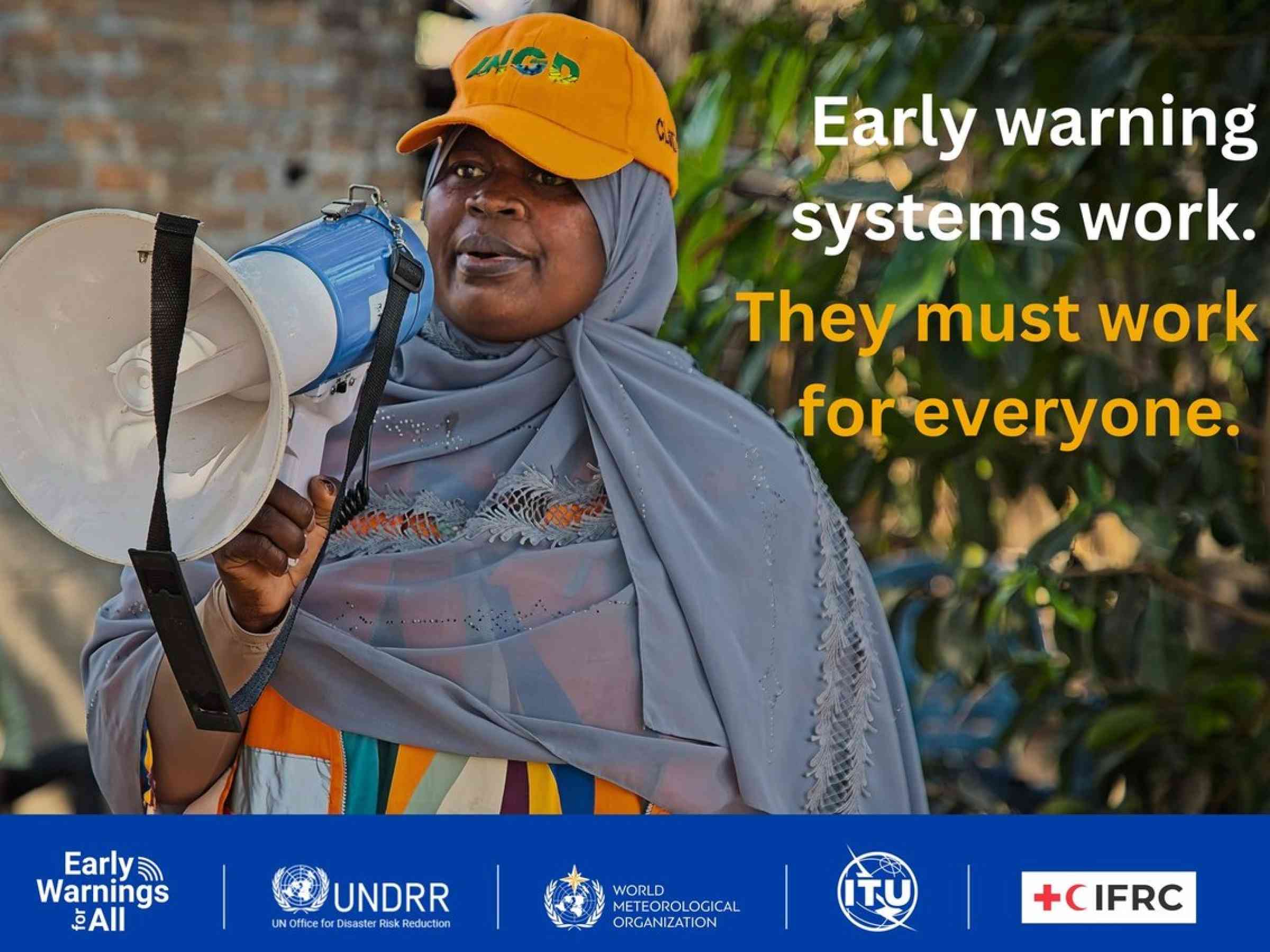
The Early Warnings for All (EW4All) initiative aims to ensure universal protection from hazardous hydrometeorological, climatological and related environmental events through life-saving multi-hazard early warning systems, anticipatory action and resilience efforts by the end of 2027, as called for by the United Nations Secretary-General António Guterres in 2022. More information on EW4All can be found here.
About the Global Early Warnings for All Multi-Stakeholder Forum
The Global EW4All Multi-stakeholder Forum took place during the Preparatory Days of the Global Platform (2-3 June 2025). It built on the Third Multi-Hazard Early Warning Conference (MHEWC-III) that took place during the previous Global Platform in 2022.
There are five Regional EW4All Multi-stakeholder forums which fed into the session planning, discussions and outcomes of the Global EW4All Multi-stakeholder forum.
The regional EW4All Multi-Stakeholder Fora have taken place on the following dates:
- Asia-Pacific EW4All Multi-Stakeholder forum: 15-17 October 2024
- Africa EW4All Multi-Stakeholder forum: 21 October 2024
- Europe & Central Asia EW4All Multi-Stakeholder forum: 8 November 2024
- Americas & Caribbean EW4All Multi-Stakeholder forum: 5 December 2024
- Arab States EW4All Multi-Stakeholder forum: 9 February 2025
Most EW4All Multi-Stakeholder Fora took place alongside the DRR Regional Platforms. More information on the Regional Platforms can be accessed through our dedicated page.
Sessions
The thematic sessions are as follows:
- Empowering Communities: People-Centred and User-Tailored Approaches for Early Warnings and Early/Anticipatory Action
- No Time to Waste: The Race for Effective Multi-Hazard Early Warning Systems in Fragile and Conflict Settings
- Effective Governance Models to Support Multi-Hazard Early Warning Systems
- Harnessing Innovation: Advancing Multi-Hazard Early Warning Systems through Science, Technology and Local Knowledge
- Accelerating Early Warnings for All Through International, Regional and National Cooperation and Partnerships
- Solutions for Scaling and Sustaining Investments in Multi-Hazard Early Warning Systems
Details for each session and non-thematic events can be found see in the Global Platform programme list.
Expected outcomes
- Take stock of actors and activities within the early warning and early action value chain and progress of the EW4All initiative;
- Accelerate implementation of the EW4All Initiative and other efforts to strengthen early warning systems worldwide as a contribution to the Sendai Framework Target G;
- Build new and strengthen existing stakeholder partnerships to support the enhancement and maintenance of people-centered, inclusive and end-to-end multi-hazard early warning systems by national governments;
- Champion inclusive and participatory user-tailored MHEWS which link early warnings and early action to the mitigation of socioeconomic impacts of disasters, in alignment with the UN Sustainable Development Goals;
- Outcome statement sharing overarching needs and priorities as well as emerging opportunities as identified by participants at the global level, informed by outcomes at the regional level, to feed into the GP’s thematic session on early warnings and early action
Organizing entities
The Global EW4All Multi-Stakeholder Forum is organized by a diverse group, including UNDRR and WMO as the Steering Committee, and an Organizing Committee comprised of the International Telecommunication Union (ITU), the International Federation of Red Cross and Red Crescent Societies (IFRC), the CREWS Secretariat, the Risk-informed Early Action Partnership (REAP), the United Nations Development Programme (UNDP), the United Nations Environment Program (UNEP), the Food and Agriculture Organization (FAO), United Nations Office for the Coordination of Humanitarian Affairs (OCHA), Group on Earth Observations (GEO), the United Nations Educational, Scientific, and Cultural Organization (UNESCO), the World Food Programme (WFP), Stakeholder Engagement Mechanism (SEM), the Global Network of Civil Society for Disaster Reduction (GNDR), and the Executive Office of the Secretary-General Climate Action Team.
Financial support
The Steering Committee would like to thank the CREWS initiative and its Contributing Members, the Swedish International Development Agency and the United States Agency for International Development for their financial support of the first Global Early Warnings for All Multi-Stakeholder Forum. The Steering Committee would also like to acknowledge all other sponsors, both earmarked and unearmarked, who have generously contributed to the EW4All initiative to ensure a multi-stakeholder approach.