
All-of-society engagement to finance the gap in Disaster Risk Reduction Investment
Disasters are induced by natural hazards such as cyclones, earthquakes and volcanic eruptions. As such, it remains a challenge for us to predict the occurrence and the magnitude of hazards with accuracy. Sometimes, abnormal natural phenomena occur on a scale beyond our previous experiences.
We do not have to wait for such phenomena to start our action. The latest science enables us to understand and assess the risks and take preventive action to reduce the negative impact of disasters to lives and livelihoods. Special attention needs to be paid to the vulnerable populations to protect them from falling into the vicious cycle of poverty triggered by disasters.
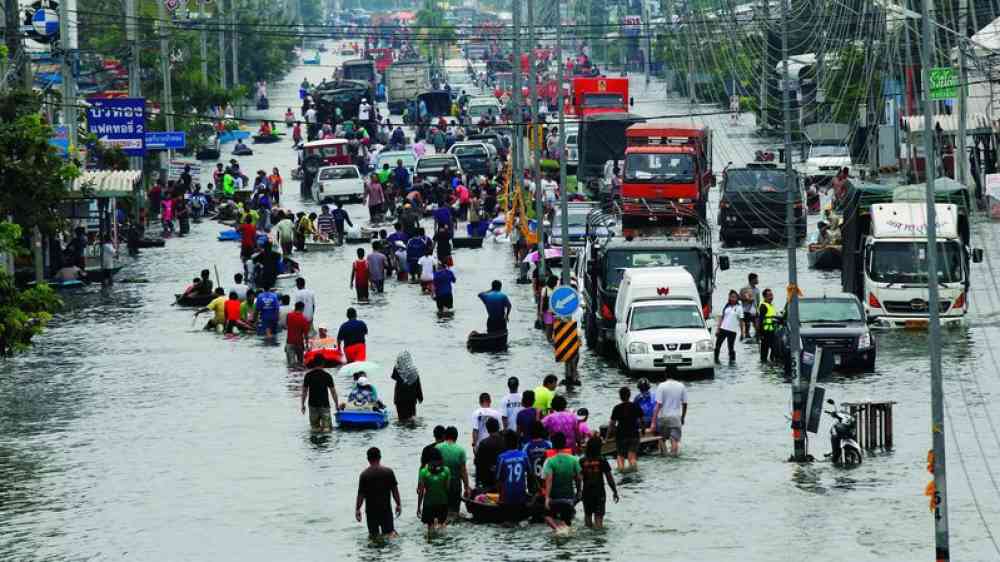
In countries with rapid population growth, disaster risk is increasing because of the unregulated urban development without due considerations for disaster risk. Climate change may further aggravate the negative consequences of disasters with higher frequency and magnitude of extreme hydro-meteorological events. While preparedness measures such as provision of evacuation facilities can reduce human casualties, if society itself remains exposed to disaster risk, every small windstorm or earthquake can deprive the means of livelihood and damage critical infrastructure, bringing economic and social activities to a halt. Governments in developing countries need to invest in proactive DRR to fundamentally reduce the risk.
SFDRR has gained global recognition of important concepts such as pre-disaster investment in DRR and Build Back Better (BBB).
Session objectives
The objective of this side event is to accelerate the implementation of specific measures to boost investment for disaster risk reduction, through sharing various methodologies and best practices to resolve bottlenecks through dialog with diverse stakeholders, including the national disaster management organizations of Member States.
Challenges remain in filling the financial gap necessary for investment and mobilizing resources for disaster risk reduction. Specific attention will be paid on addressing this gap. How we can facilitate the optimal decision by all-of-society is the key question of this session.
Join Meeting
Moderators:
- Prof. Satoru Nishikawa, Japan International Cooperation Agency (JICA)
Speakers:
Mr. HARA Hiroaki, Vice-Minister for Policy Coordination, Cabinet Office of Japan
Mr. ITO Teruyuki, Director General, Global Environment Department Japan International Cooperation Agency (JICA)
Dr. Kimio Takeya, Distinguished Technical Advisor on Disaster Risk Reduction, Japan International Cooperation Agency (JICA)
Dr. Renato U. Solidum, JR., Secretary, Department of Science and Technology (DOST), Philippines
Prof. Ravi Sinha, Professor and Former Dean, Indian Institute of Technology Bombay (IITB), India
Dr. Daisuke Komori, International Research Institute of Disaster Science (IRIDeS), Tohoku University, JICA
Mr. Napolioni Boseiwaqa, Acting Director, National Disaster Risk Management Office (NDRMO), Ministry of Rural and Maritime Development and Disaster Management, Fiji
Mr. AKIYAMA Shintaro, Deputy Director General and Group Director for Disaster Risk Reduction, Global Environment Department, Japan International Cooperation Agency (JICA)
Mr. Birendrajana, M.T, Director for Water Resources Management System and Strategy, Ministry of Public Works (PU), Indonesia
Secretary of Integral Risk Management and Civil Protection, Mexico City (SGIRPC-CDMX), Mexico
Mr. Luis Alonso Amaya Durán, Secretary for Vulnerability Issues, Director General of Civil (DGCP), El Salvador / Member State of Coordination Centre for the Prevention of Natural Disasters in Central America (CEPREDENAC), Central America Region
Ms. Pumeza Tyali, Deputy Director, National Disaster Management Centre (NDMC), Department of Cooperative Governance, South Africa
Ms. Elizabeth Riley, Executive Director, Caribbean Disaster Emergency Management Agency (CDEMA), Caribbean
Mr. Ronald Jackson, Head, Disaster Risk Reduction and Recovery for Building Resilience, United Nations Development Programme (UNDP)
Learn more
Organized by
- Japan International Cooperation Agency (JICA)
- Coordination Centre for the Prevention of Natural Disasters in Central America (CEPREDENAC) and its member state
- Indian Institute of Technology Bombay (IITB)
- International Research Institute of Disaster Science (IRIDeS), Tohoku University
Agenda
06 Jun 2025
12:45 - 14:15 (CEST+0 Europe/Berlin)
Location
Room 4
CICG
CICG
Online access
Details
Accessible
International sign
Cart
Contact
Shintaro Akiyama
[email protected]
Onsite Accessibility